BAU LÜTZ
The mobile version of the website is currently being developed.
For now, please open this website on a computer.
SUSTAINABILITY AS A DESIGN RESPONSIBILITY
OUR STARTING POINT
Bau Lütz’s ecological research grows from a concrete relationship with buildings, landscapes, materials, and quality of living developed between Switzerland and Italy. Reusing what exists, reducing waste, protecting health and comfort, and creating durable systems come before any label.
FROM QUESTIONS TO VERIFICATION
WHY THESE THEMES
We chose them because they recur in decisions about existing assets, resources, comfort, maintenance, and territorial value. They are a Bau Lütz working framework, not a universal ranking.
LAND AND REUSE
Question: how much new land is genuinely necessary?
Response: we first examine the available built heritage and the opportunities for regeneration.
Verification: asset framework, constraints, and use scenarios.
ENERGY AND COMFORT
Question: how can needs be reduced without compromising the quality of living?
Response: we relate orientation, envelope, building systems and use.
Verification: performance targets and relevant specialist studies.
MATERIALS AND HEALTH
Question: which solution is compatible with the building, its occupants and the supply chain?
Response: we compare performance, origin, durability and maintenance.
Verification: comparison sheets and criteria.
WATER AND BIODIVERSITY
Question: how do the building and landscape manage water, soil and greenery?
Response: we integrate permeability, habitats and management.
Verification: site analysis and proportionate measures.
DURABILITY AND MAINTENANCE
Question: who will maintain the system, and with what resources?
Response: we consider accessibility, repairability and management from the earliest decisions.
Verification: maintenance scenarios and responsibilities.
COMMUNITIES AND LOCAL ECONOMIES
Question: what value remains in the territory?
Response: we assess services, expertise, supply chains and the quality of shared spaces.
Verification: use programme and network to activate.
MOBILITY AND ACCESSIBILITY, WHERE RELEVANT
Question: how can spaces be reached and used without creating new barriers?
Response: we integrate routes, access, active mobility and logistics into the site analysis.
Verification: access plan, conditions of use and necessary specialist studies.
SUSTAINABILITY
SUSTAINABILITY
AS DESIGN RESPONSIBILITY
IN EVERY PROJECT
For Bau Lütz, sustainability begins with concrete decisions about land, energy, materials, health, durability, landscape, maintenance and accessibility.
Reducing new land consumption, regenerating what exists, protecting health and comfort, and building durable systems come before any label.

OUR STARTING POINT
Bau Lütz's ecological research grows out of concrete experience with buildings, landscapes, materials and quality of living developed between Switzerland and Italy.
Working with what exists, reducing waste, protecting health and comfort, and building durable systems come before any label.

“Decisions about existing heritage, resources, comfort, maintenance and territorial value form a working framework for Bau Lütz, not a universal ranking.”
FROM QUESTIONS TO VERIFICATION
Our method does not begin with a universal ranking, but with concrete questions verified in the context of each project.
01LAND AND REUSEQuestion: how much new land is genuinely necessary? | 02ENERGY AND COMFORTQuestion: how can demand be reduced without compromising quality of living? | 03MATERIALS AND HEALTHQuestion: which solution is compatible with the building, its occupants and the supply chain? |
04WATER AND BIODIVERSITYQuestion: how do the building and landscape manage water, soil and greenery? | 05DURABILITY AND MAINTENANCEQuestion: who will maintain the system, and with what resources? | 06COMMUNITIES AND LOCAL ECONOMIESQuestion: what value remains in the territory? |
07MOBILITY AND ACCESSIBILITY, WHERE RELEVANTQuestion: how can spaces be reached and used without creating new barriers? Response: we integrate routes, access, active mobility and logistics into the site analysis. Verification: access plan, conditions of use and necessary specialist studies. | ||

Every decision is verified in its real context and geared towards long-term durability.
2030 AGENDA
AND SWISS REFERENCES
A framework, not a label
The 2030 Agenda Sustainable Development Goals help connect local decisions with broader issues. They are not a building certification and do not replace standards, permits or technical assessments.
Application tools
SNBS, Minergie, Minergie-ECO, CECB Plus and other Swiss references can guide criteria, questions and further studies. Bau Lütz does not claim certifications without supporting documentation.
Our perspective
Reduce new land consumption, regenerate underused structures, build durable living systems and integrate landscape, local economies, quality of living and management.
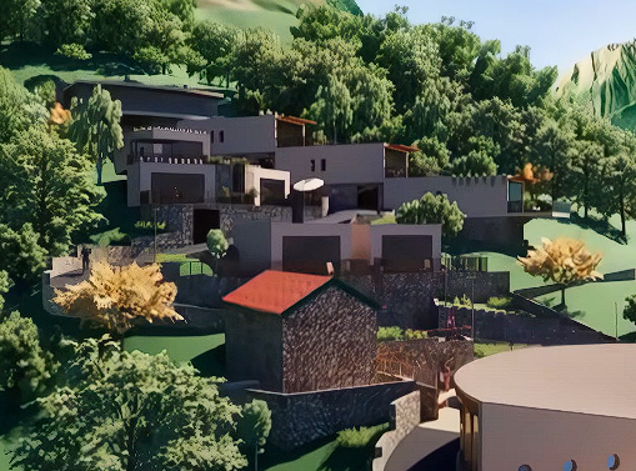
La Farfalla applies this perspective as a model under development; each site requires its own assessment.
READ THE METHOD →Verifiable decisions, design responsibility, specific context and long-term durability guide every choice. | UNDERSTAND THE CONTEXT | CHOOSE WITH RESPONSIBILITY | VERIFY OVER TIME | BUILD DURABILITY |

THE 2030 AGENDA AND SWISS REFERENCES
A framework, not a label
The UN Sustainable Development Goals connect local decisions with broader challenges. They are not a building certification and do not replace codes, approvals or technical checks.
Tools used only when relevant
SNBS, Minergie, Minergie-ECO, CECB Plus and other Swiss references can guide criteria, questions and further studies. Bau Lütz does not claim certifications without supporting documentation.
Our perspective
Reduce new land take, regenerate underused structures, create durable living systems, and connect landscape, local economies, quality of life and long-term management.
La Farfalla: applies this perspective as a model in development; each site requires its own verification.